LYCOMING 1-190-010-03 Turbine Engine Rotor T-53
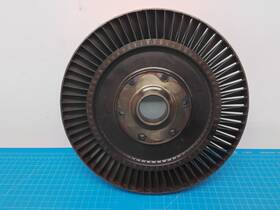
( Brand: Lycoming ), ( Manufacturer Part Number: 1-190-010-03 ), ( Part Type: Rotor Engine ), ( Compatible Make: Lycoming T-53 Series ), ( Compatible Model: Bell Uh-1 Series Helicopters ), ( Country Of Origin: United States )
Review LYCOMING T-53 Turbine Engine Rotor Assy Pn#
The **Lycoming T-53-L-13B (Model 1-190-010-03) Turbine Engine Rotor** is a critical, high-performance component designed for the legendary Bell UH-1 Huey helicopter series, as well as other military and civilian turbine-powered rotorcraft. This precision-engineered rotor assembly forms the heart of the Lycoming T-53-L-13B turboshaft engine, a robust and reliable powerplant renowned for its durability and adaptability across demanding operational environments. Crafted from high-strength, heat-treated aerospace-grade materials, the rotor comprises a meticulously balanced, multi-stage turbine section that converts the high-pressure, high-temperature exhaust gases from the compressor into mechanical rotational energy. The rotor assembly integrates a series of precision-machined turbine blades, each contoured to optimize aerodynamic efficiency while withstanding extreme centrifugal forces and thermal cycling. These blades are often constructed from nickel-based superalloys or titanium alloys, depending on the specific variant, to ensure resistance to fatigue, corrosion, and thermal degradation under continuous high-speed operation. The rotor s design incorporates advanced cooling passages and internal cooling systems to dissipate heat generated during operation, thereby extending the engine s service life and maintaining peak performance even under sustained high-load conditions. This component is essential for the helicopter s flight dynamics, as it directly drives the main and tail rotors, enabling the aircraft to achieve the necessary lift, thrust, and maneuverability required for its mission profile. Whether deployed in military transport, search-and-rescue, or specialized utility roles, the T-53-L-13B rotor ensures consistent and dependable power output, making it a cornerstone of helicopter aviation. Its robust construction and proven reliability have cemented its legacy as a workhorse in both combat and civilian applications, where precision, endurance, and adaptability are paramount.
### **Pros and Cons of Buying a Lycoming IO-190-010-03 (T-53 Turbine Engine Rotor)**
#### **Pros:**1. **Reliability and Proven Performance** The Lycoming IO-190 series is a well-established engine design with decades of use in general aviation. The T-53 turbine rotor is a critical component for turbine-powered aircraft, and Lycoming s reputation for durability is strong. Many operators have successfully maintained these engines for thousands of hours with proper care.
2. **Widespread Availability of Parts and Support** Due to its long service history, the IO-190-010-03 benefits from extensive aftermarket support. Spare parts, service manuals, and technical assistance are relatively easy to obtain, reducing downtime and repair costs.
3. **Compatibility with Existing Aircraft** If you already own a turbine-powered aircraft (such as a Beechcraft King Air or similar), this rotor is likely a direct replacement part, minimizing integration challenges.
4. **Potential Cost Savings Over New Engines** Compared to purchasing a brand-new turbine engine or rotor, a used or refurbished Lycoming component can be significantly cheaper, making it an attractive option for budget-conscious operators.
5. **Refurbishment Options** Many Lycoming IO-190 engines and components can be sent to certified repair stations for overhaul, extending their service life and improving reliability before installation.
6. **Familiarity for Mechanics** Since Lycoming engines are common in general aviation, pilots and mechanics are more likely to have experience working with them, reducing the learning curve for maintenance.
---
#### **Cons:**1. **Age and Wear** The IO-190-010-03 is an older design, and if the rotor has high time or poor maintenance history, it may require extensive refurbishment or replacement of internal components (such as bearings, seals, or turbine blades).
2. **Limited Modern Technology** Compared to newer turbine engines, the IO-190 lacks advanced diagnostics, fuel efficiency improvements, and emissions compliance features. This may result in higher operating costs over time.
3. **Potential for Hidden Damage** Without a thorough inspection (including boroscope checks, vibration analysis, and metallurgical testing), hidden cracks, corrosion, or wear in the rotor could lead to catastrophic failure if not addressed.
4. **Regulatory and Certification Challenges** If the rotor is not from a FAA-approved source or lacks proper documentation, obtaining an STC (Supplemental Type Certificate) or FAA approval for installation may be difficult and costly.
5. **Maintenance and Inspection Requirements** Turbine engines, including Lycoming s, require rigorous TBO (Time Between Overhauls) compliance, regular borescope inspections, and strict maintenance records. Failure to meet these standards can lead to forced removals or airworthiness issues.
6. **Resale Value and Depreciation** Older Lycoming components, even in good condition, may depreciate faster than newer alternatives. If you plan to sell the aircraft later, the rotor s age could affect its marketability.
7. **Training and Expertise Needed** Turbine engines demand specialized knowledge for safe operation and maintenance. If your crew lacks experience with Lycoming turbines, additional training may be required, increasing operational costs.
---
### **Conclusion:**Buying a Lycoming IO-190-010-03 T-53 turbine rotor can be a cost-effective solution if you prioritize reliability, parts availability, and compatibility with existing aircraft. However, the risks of hidden damage, regulatory hurdles, and high maintenance demands must be carefully evaluated. The decision depends on your budget, operational needs, and willingness to invest in thorough inspections, refurbishment, and ongoing maintenance.
### **Recommendation:**- **If purchasing new or from a reputable source:** Proceed with confidence, especially if the rotor has a clean service history and comes with full documentation. Ensure it undergoes a full overhaul at a certified repair station before installation.
- **If purchasing used:** Conduct an independent inspection by a turbine engine specialist, including borescope checks, vibration analysis, and metallurgical testing. Verify the rotor s TBO compliance and maintenance records.
- **Consider alternatives:** If budget allows, explore newer turbine engines (e.g., Pratt & Whitney Canada PT6, Honeywell TPE) for better efficiency and longevity, though they may come at a higher upfront cost.
- **Factor in long-term costs:** Account for fuel consumption, maintenance expenses, and potential downtime when evaluating whether the rotor aligns with your operational goals.
Ultimately, the best choice depends on balancing immediate savings with long-term reliability and safety. For critical applications, prioritize quality and certification over cost alone.
Details:
FSN# 2840-01-010-5949 Used as removed condition, No records Available. Selling in AS-IS Condition. Lycoming Honeywell Turbine Engine, Rotor Assay Part Number# 1-190-010-03.
specifications engineaviatio:
- brand: Lycoming
- mpn: 1-190-010-03
- part type: Rotor Engine
- compatible make: Lycoming T-53 Series
- compatible model: Bell Uh-1 Series Helicopters
- country of origin: United States
payments engineaviatio:
- credit card: Discover
- wallet: Apple-pay
- other
seller engineaviatio:
- city: Cleburne, Texas
- # reviews: 1172
- rating: 100.0%
shipping engineaviatio:
- service: USPS Ground Advantage
- cost: $11.23
- carrier: USPS
- transit: 4-9 Days
- class: Standard
- type: Calculated
returns engineaviatio:
- policy: No Returns
general engineaviatio:
- Aviation Parts Accessories > Engines > Engine Components
- condition: Used
offer engineaviatio:
- sold: 0
- options: Ship-to-home
- best offers: True
- quantity: 1
- started: April 9, 2026
- availability: In Stock
Lycoming 1-190-010-03 Is Similar To:
- 10-5193 10-5193 Lycoming Engine Carburetor (38.4% similar) Buyer to determine airworthiness. This can fit many other engine model's. This was removed a late model O-360-A4M roller engine that converted to fuel injection system. 5, Le this is a used, very low time, Lycoming carburetor part, MA-4...(January 19th, 2018)
- 0-320-a2b Lycoming Avco Airplane Engine (42.1% similar) 1 original hours, w log book. On compression engine removed from PA18 has not been run since. Selling this for a friend...(February 15th, 2018)
- 0-320-e2g Lycoming Complete Engine All Accessories Fwf Wide Deck No Prop (37.5% similar) Overhauled in new left mag and right this engine is currently still flying can be seen tested at kWh Shelby NC. Compression at last annual, this week, were 78,77,73,76. The engine is in excellent condition and my dad has years of oil analysis documentation showing normal trends all green. Lycoming O...(March 17th, 2018)
- 0-435-1 Lycoming Engine (38% similar) This is a used Lycoming model aircraft engine. I can load on your truck or trailer. Believed it came out of a air boat. Do not know much about this engine...(May 12th, 2018)
- 0-540-a1d5 Lycoming Engine Accessories Piper Comanche Pa24-250 (37.3% similar) For sale is a Lycoming A1D5 engine, serial no. L, 250HP that was removed from a 1959 piper Comanche PA24 250. To the lower 48 states. This engine did suffer a low power prop strike when there was an electrical outage and the pilot could not put down the landing gears before landing on the runway ...(September 18th, 2015)
- 05k21100 Lycoming Cylinder Assembly (39.6% similar) See pictures for condition. Comes with completed valve assembly, piston, and gasket seal kit. Overhauled wide deck Lycoming cylinder assembly. Unit is surplus...(September 9th, 2018)
- 05k21120 Lycoming Aircraft Engine Cylinder (40.8% similar) New wide deck engine cylinder, brand still in original box packaging never opened. It has been stored in a climate controlled storage room since ordered from Lycoming. FITS:APPLICATIONSIO360 A1A, A1B, A1B6, A1B6D, A1C, A1C6, A1D, A1AD, A1D6D, A2A, A2B, A2C, A3B6, A3B6D, A3D6D, C1A, C1B, C1C, C1C6, ...(March 6th, 2018)
- 1-110-520-19d Lycoming T53 Turbine Stator (49.5% similar) The turbine stater nozzle is in remanufactured condition tag picture 3 states that it needs to be recorded...(December 1st, 2017)
- 1-110-520-19l Lycoming Turbine Stator Nozzle (42% similar) ...(February 26th, 2018)
- 1-150-260-02 Lycoming Exhaust Diffuser Support Cone Assembly (31% similar) No dents or gouges dent hoses. If you are needing more pictures just ask. I am selling the unit in as is condition. The Lycoming exhaust diffuse support cone assembly comes with fuel lines brackets all of which appears to be in really nice condition...(April 16th, 2018)
- 1130-b Lycoming Aircraft Engine Valve Spring Depressor (38.2% similar) Used when removing installing overheads in cylinders. Here is 1 each of rare and hard to find Lycoming aircraft engine P/N b depressor, valve spring in new unused surplus condition...(February 7th, 2016)
