LYCOMING 1-070-103-01 Turbine Engine Liner T-53
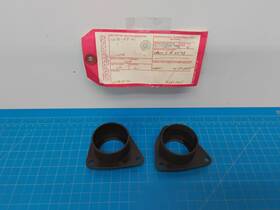
( Brand: Lycoming ), ( Manufacturer Part Number: 1-070-103-01 ), ( Part Type: Engine Liner ), ( Compatible Make: Bell Uh-1 Helicopters ), ( Compatible Model: Bell Uh-1 Series Helicopters ), ( Country Of Origin: United States )
Review LYCOMING T-53 Turbine Engine Liner Part
The **Lycoming T-53-L-1B (Model 1-070-103-01) Turbine Engine Liner** is a precision-engineered, high-performance component designed specifically for the Lycoming T-53-L-1 series of turboshaft engines, which power a wide range of military and commercial aircraft, including iconic helicopters such as the Bell UH-1 Huey, Boeing-Vertol CH-47 Chinook, and other rotary-wing platforms. This critical component serves as the inner casing of the turbine section, housing the high-pressure turbine blades and ensuring the efficient conversion of exhaust gases into mechanical energy while maintaining structural integrity under extreme operating conditions. Crafted from high-temperature-resistant alloys, the liner is subjected to rigorous heat treatment and machining processes to achieve an optimal balance of strength, durability, and thermal stability, allowing it to withstand continuous exposure to temperatures exceeding 1,200 F (650 C) without deformation or failure. Its seamless design minimizes turbulence within the turbine flow path, enhancing overall engine efficiency and reducing the risk of blade erosion or foreign object damage (FOD). The liner s precise tolerances and aerodynamic contours are meticulously engineered to optimize gas flow dynamics, ensuring consistent power output and reliability across a broad operational envelope, from high-altitude flight to aggressive maneuvering. Additionally, this component is often paired with advanced cooling systems and thermal barrier coatings to further extend its service life and mitigate the effects of thermal cycling, making it a cornerstone of the T-53 s reputation for dependability in demanding environments. Whether in service with military forces, search-and-rescue missions, or commercial aviation, the T-53-L-1B liner exemplifies Lycoming s legacy of innovation in turbine engine technology, delivering uncompromising performance and longevity in the most challenging flight conditions.
### **Pros and Cons of Buying a Lycoming T-53 Turbine Engine Liner (Part Number 1-070-103-01)**
#### **Pros**
1. **Compatibility with T-53 Engines** The 1-070-103-01 is a standard replacement liner for the Lycoming T-53-L-703 and similar variants, ensuring proper fit and function if the original is worn or damaged.
2. **Extended Engine Life** A new or refurbished liner reduces internal wear, improving efficiency and reducing the risk of catastrophic failure due to excessive scoring or erosion.
3. **Improved Performance** A properly installed liner helps maintain compression and fuel efficiency, which can lead to better throttle response and reduced fuel consumption.
4. **Cost-Effective Alternative to Engine Replacement** Replacing just the liner is significantly cheaper than overhauling or replacing the entire T-53 engine, making it a practical choice for budget-conscious operators.
5. **Availability of New and Used Options** New liners are available from Lycoming or authorized distributors, while refurbished or rebuilt liners may be found through aviation parts suppliers, offering cost savings.
6. **Easier Maintenance Access** The T-53 is a well-documented engine, and liner replacement is a relatively straightforward procedure for experienced mechanics, reducing downtime.
7. **Potential for Increased Reliability** If the liner failure was due to wear or contamination, a new liner can restore the engine to near-new condition, reducing the likelihood of future issues.
---
#### **Cons**
1. **Cost of Replacement** While cheaper than engine overhaul, a new liner still represents a significant investment, often ranging from **$1,500 to $3,000 **, depending on whether it is new or refurbished.
2. **Labor Intensive Installation** Removing and installing a liner requires disassembling the engine, which may require **20-40 hours of labor** depending on the mechanic s experience. This adds to the total cost.
3. **Risk of Improper Installation** If not installed correctly, a liner can cause **scoring, imbalance, or premature wear** on other engine components, potentially leading to more expensive repairs.
4. **Limited Longevity Without Full Overhaul** Even with a new liner, the rest of the engine (compressor, turbine, bearings, etc.) may still be near the end of its service life. A full overhaul may be needed sooner rather than later.
5. **Potential for Counterfeit or Low-Quality Parts** Purchasing from unapproved suppliers risks receiving **substandard or counterfeit liners**, which could fail prematurely and void warranties.
6. **Downtime Impact** Aircraft owners must account for **extended maintenance periods**, especially if the engine is critical to operations (e.g., flight training, air taxi, or military use).
7. **Additional Inspection Requirements** After liner replacement, the engine may require **boroscope inspections, vibration analysis, or performance checks** to ensure proper operation, adding to maintenance costs.
---
### **Conclusion**
Replacing a **Lycoming 1-070-103-01 T-53 turbine engine liner** is a **practical and cost-effective solution** for restoring engine efficiency and preventing catastrophic failure when the liner is worn or damaged. However, it is **not a permanent fix** it extends the life of the engine but does not address other aging components.
The decision to replace the liner should be based on:- **Engine condition** (are other major components still serviceable?)
- **Budget** (can the owner afford labor and potential follow-up repairs?)
- **Operational needs** (is the engine critical to daily operations?)
- **Supplier reliability** (is the liner from an approved source to avoid counterfeit parts?)
If the rest of the engine is in **good condition**, a liner replacement is a **wise investment**. If the engine is **near the end of its service life**, a **full overhaul or engine replacement** may be more economical in the long run.
---
### **Recommendation**
1. **Verify Engine Health** Before purchasing a liner, have a **qualified aviation mechanic** inspect the engine for **compressor wear, turbine damage, or bearing condition**. If other components are degraded, a full overhaul may be necessary.
2. **Source from Approved Suppliers** Purchase the liner from **Lycoming, an FAA-approved distributor, or a trusted aviation parts dealer** to ensure authenticity and quality.
3. **Budget for Labor** Account for **disassembly, installation, and post-replacement inspections** (boroscope checks, vibration analysis) to avoid hidden costs.
4. **Consider a Full Overhaul if Engine is Aging** If the engine has **high TBO (Time Between Overhauls) hours**, replacing just the liner may not be sufficient. A **Lycoming-authorized overhaul** ensures all critical components are refurbished.
5. **Document the Work** Keep detailed records of the liner replacement, including **installation notes, inspection reports, and any modifications**, to assist with future maintenance and FAA compliance.
**Final Verdict:**- **If the engine is otherwise healthy and the liner is the primary issue Proceed with liner replacement.**
- **If the engine is near TBO or has multiple degraded components Consider a full overhaul or engine replacement.**
A well-executed liner replacement can **extend engine life and improve reliability**, but it should be part of a **larger maintenance strategy** rather than a standalone fix.
Details:
Lycoming T-53 Series Bearing Liners 2 Each Part Number # 1-070-103-01. Selling is AS-IS Condition. Removed During Scheduled Overhaul IAW.B # 0093.
part #: 107010301 price
- $35.00
specifications engineaviatio:
- brand: Lycoming
- mpn: 1-070-103-01
- part type: Engine Liner
- compatible make: Bell Uh-1 Helicopters
- compatible model: Bell Uh-1 Series Helicopters
- country of origin: United States
returns engineaviatio:
- policy: No Returns
seller engineaviatio:
- city: Cleburne, Texas
- # reviews: 1157
- rating: 100.0%
general engineaviatio:
- condition: Used
- Aviation Parts Accessories > Engines > Engine Components
offer engineaviatio:
- options: Ship-to-home
- quantity: 1
- best offers: True
- started: March 21, 2026
- sold: 0
- availability: In Stock
shipping engineaviatio:
- transit: 5-11 Days
- cost: $8.46
- type: Calculated
- carrier: USPS
- service: USPS Ground Advantage
- class: Standard
payments engineaviatio:
- other
- wallet: Google-pay
- credit card: Mastercard
Lycoming 1-070-103-01 Is Similar To:
- 10-5193 10-5193 Lycoming Engine Carburetor (39.2% similar) Buyer to determine airworthiness. This can fit many other engine model's. This was removed a late model O-360-A4M roller engine that converted to fuel injection system. 5, Le this is a used, very low time, Lycoming carburetor part, MA-4...(January 19th, 2018)
- 0-320-a2b Lycoming Avco Airplane Engine (43% similar) 1 original hours, w log book. On compression engine removed from PA18 has not been run since. Selling this for a friend...(February 15th, 2018)
- 0-320-e2g Lycoming Complete Engine All Accessories Fwf Wide Deck No Prop (36.5% similar) Overhauled in new left mag and right this engine is currently still flying can be seen tested at kWh Shelby NC. Compression at last annual, this week, were 78,77,73,76. The engine is in excellent condition and my dad has years of oil analysis documentation showing normal trends all green. Lycoming O...(March 17th, 2018)
- 0-435-1 Lycoming Engine (39% similar) This is a used Lycoming model aircraft engine. I can load on your truck or trailer. Believed it came out of a air boat. Do not know much about this engine...(May 12th, 2018)
- 0-540-a1d5 Lycoming Engine Accessories Piper Comanche Pa24-250 (37.9% similar) For sale is a Lycoming A1D5 engine, serial no. L, 250HP that was removed from a 1959 piper Comanche PA24 250. To the lower 48 states. This engine did suffer a low power prop strike when there was an electrical outage and the pilot could not put down the landing gears before landing on the runway ...(September 18th, 2015)
- 05k21120 Lycoming Aircraft Engine Cylinder (45.8% similar) New wide deck engine cylinder, brand still in original box packaging never opened. It has been stored in a climate controlled storage room since ordered from Lycoming. FITS:APPLICATIONSIO360 A1A, A1B, A1B6, A1B6D, A1C, A1C6, A1D, A1AD, A1D6D, A2A, A2B, A2C, A3B6, A3B6D, A3D6D, C1A, C1B, C1C, C1C6, ...(March 6th, 2018)
- 1-110-520-19d Lycoming T53 Turbine Stator (46.3% similar) The turbine stater nozzle is in remanufactured condition tag picture 3 states that it needs to be recorded...(December 1st, 2017)
- 1-110-520-19l Lycoming Turbine Stator Nozzle (38.8% similar) ...(February 26th, 2018)
- 10599a Continental Lycoming Oil Cooler Part Number With Overhauled By Skyline (29% similar) Overhauled by skyline accessories...(May 27th, 2018)
- 1130-b Lycoming Aircraft Engine Valve Spring Depressor (40.7% similar) Used when removing installing overheads in cylinders. Here is 1 each of rare and hard to find Lycoming aircraft engine P/N b depressor, valve spring in new unused surplus condition...(February 7th, 2016)
- 12511 Lycoming Overhauled Engine Crankcase (41.7% similar) Freshly overhauled Lycoming O-320 crankcase LW-12511...(June 4th, 2018)
