LYCOMING AVCO 1-030-348-01 Turbine Engine Reduction Carrier T-53
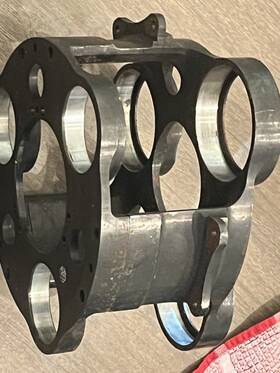
( Brand: Lycoming Avco ), ( Manufacturer Part Number: 1-030-348-01 ), ( Part Type: Engine ), ( Compatible Make: Lycoming ), ( Compatible Model: Bell Uh-1 Series Helicopters ), ( Country Of Origin: United States )
Review LYCOMING AVCO T-53 Turbine Engine Reduction Carrier Pn#
The **Lycoming AVCO 1-030-348-01 T-53 Turbine Engine Reduction Carrier** is a critical and highly specialized component within the power transmission system of the iconic Lycoming T-53-L-703 turboshaft engine, widely recognized for its service in military helicopters such as the Bell UH-1 "Huey" and the Boeing CH-47 Chinook. This reduction carrier serves as the foundational gearbox housing that facilitates the transfer of rotational power from the turbine section of the engine to the main transmission, ensuring optimal torque conversion and efficient energy distribution. Crafted from high-strength, precision-machined alloy steel, the carrier is designed to withstand extreme operational stresses, including high centrifugal forces, thermal cycling, and prolonged exposure to harsh environments, all while maintaining structural integrity and minimizing wear. Its internal architecture features a robust set of planetary gears and a robust output shaft assembly, engineered to reduce engine speed while multiplying torque an essential function for matching the engine s high RPM output to the slower, higher-torque requirements of helicopter rotors and auxiliary systems. The carrier s intricate design incorporates precision bearings, seals, and lubrication pathways to ensure smooth operation and longevity, often operating in tandem with the engine s accessory drive system to power ancillary components like generators, hydraulic pumps, and fuel controls. Given its role as a mission-critical component, this reduction carrier is subject to rigorous quality control measures, including heat treatment, surface hardening, and dimensional inspections, to guarantee compliance with military specifications and aerospace-grade performance standards. Whether in service with military forces, civilian operators, or aviation enthusiasts restoring vintage aircraft, the 1-030-348-01 remains a testament to Lycoming s legacy of reliability and engineering excellence in turboshaft propulsion systems.
### **Pros and Cons of buying a Lycoming AVCO 1-030-348-01 (T-53 Turbine Engine Reduction Carrier)**
#### **Pros:**1. **Compatibility with T-53 Engines** This reduction carrier is specifically designed for the Lycoming AVCO T-53-L-701 series turbine engine, which is widely used in military helicopters (e.g., Bell UH-1, AH-1, and some Sikorsky models). If you already own or plan to acquire a T-53-powered aircraft, this part is a direct fit, reducing the need for modifications.
2. **Proven Reliability** The T-53 engine is a well-established powerplant with decades of operational history in military and some civilian applications. The reduction carrier is a critical component in transmitting power from the turbine to the rotor system, and its design has been refined over time to ensure durability.
3. **Availability of Support and Parts** Due to the widespread use of T-53 engines, finding replacement parts, manuals, and technical support is relatively easier compared to less common turbine engines. This can simplify maintenance and troubleshooting.
4. **Potential for Remanufacturing** Some reduction carriers, including those from the T-53 family, may be eligible for remanufacturing or overhaul by certified shops. This can extend the usable life of the component at a lower cost than purchasing new.
5. **Secondhand Market Availability** Since T-53 engines and their components are still in use in military surplus and civilian aviation, you may find this reduction carrier at a lower cost than a new one, especially if sourced from a reputable dealer or auction.
6. **Standardized Design** The reduction carrier follows a standardized design, meaning that if you encounter issues, there are likely existing troubleshooting guides, repair procedures, and even aftermarket upgrades available.
---
#### **Cons:**1. **Age and Wear** The T-53 engine and its components, including the reduction carrier, are not modern by aviation standards. This means they may be more prone to wear, fatigue, or failure over time compared to newer turbine engines. If the part is sourced secondhand, its condition may be unknown unless thoroughly inspected.
2. **Maintenance Requirements** Older turbine engines, including the T-53, require rigorous maintenance schedules, including inspections, lubrication checks, and potential overhauls. The reduction carrier is no exception it may need periodic disassembly, cleaning, and replacement of internal components (e.g., bearings, seals, or gears).
3. **Limited Modern Upgrades** Unlike newer engines, the T-53 system lacks modern advancements such as FADEC (Full Authority Digital Engine Control), improved materials, or advanced diagnostics. This can limit performance optimization and increase reliance on manual monitoring.
4. **Fuel Efficiency and Emissions** The T-53 is known for its fuel consumption and emissions, which may not meet modern environmental or operational efficiency standards. If you are operating in an environment with strict regulations, this could be a drawback.
5. **Dependence on Military or Legacy Suppliers** While parts are available, some suppliers may be limited to military surplus channels, which can introduce logistical challenges (e.g., procurement delays, higher costs for rare components, or bureaucratic hurdles).
6. **Potential for Hidden Damage** If purchasing a used reduction carrier, there is a risk of hidden damage (e.g., cracks, worn bearings, or misalignment) that could lead to catastrophic failure if not properly inspected. A thorough inspection by a qualified mechanic is essential.
7. **Training and Expertise** Operating and maintaining a T-53 engine requires specialized knowledge. If your team lacks experience with this engine, training costs and potential downtime for learning curves could add to the overall expense.
---
### **Conclusion:**The Lycoming AVCO 1-030-348-01 T-53 reduction carrier is a practical choice if you are working with a T-53-powered aircraft and need a direct-fit, reliable component. Its compatibility, availability of support, and potential for remanufacturing make it a viable option for those already invested in the T-53 ecosystem. However, its age, maintenance demands, and lack of modern advancements mean it is not ideal for those seeking cutting-edge performance or long-term low-maintenance operation.
If you are restoring a vintage helicopter or maintaining a military surplus aircraft, this part is a sound investment. For new or civilian applications where fuel efficiency, emissions, or modern diagnostics are priorities, a newer engine system may be more appropriate.
---
### **Recommendation:**1. **Verify the Condition** If purchasing used, ensure the reduction carrier undergoes a thorough inspection by a certified mechanic. Look for signs of wear, corrosion, or damage to bearings, gears, and seals. Consider having it overhauled if it has significant mileage or unknown history.
2. **Source from a Reputable Dealer** Avoid purchasing from unverified sellers. Military surplus auctions, trusted aviation parts suppliers, or engine overhaul shops are better options than unknown sources.
3. **Budget for Maintenance** Account for the cost of regular inspections, lubrication, and potential overhauls. The T-53 system requires more attention than newer engines, so factor this into your operational budget.
4. **Consider Remanufacturing** If the part is old, explore remanufacturing options through certified shops. This can extend its life and improve reliability at a lower cost than buying new.
5. **Evaluate Long-Term Viability** If you are planning to keep the aircraft operational for many years, weigh the pros and cons against the cost of transitioning to a newer engine system in the future. The T-53 is robust but not indefinitely sustainable without significant investment in maintenance.
6. **Train Your Crew** Ensure your maintenance team is experienced with T-53 engines. If not, allocate resources for training to avoid costly mistakes or downtime.
**Final Verdict:** The 1-030-348-01 reduction carrier is a practical and cost-effective solution for T-53 applications, provided it is properly inspected and maintained. For non-T-53 projects or modern aviation needs, alternative components may be more suitable.
Details:
Most likely Icon. Lycoming T-53 Turbine Engine Reduction Carrier PN# 1-030-348-01, - Came with a lot of Lycoming t-53 engines.
part #: 103034801 price
- $79.99
specifications engineaviatio:
- brand: Lycoming Avco
- mpn: 1-030-348-01
- part type: Engine
- compatible make: Lycoming
- compatible model: Bell Uh-1 Series Helicopters
- country of origin: United States
offer engineaviatio:
- quantity: 1
- best offers: True
- availability: In Stock
- started: May 20, 2026
- options: Ship-to-home
- sold: 0
shipping engineaviatio:
- type: Fixed
- transit: 3-7 Days
- class: Economy
- cost: $19.99
- service: Economy
general engineaviatio:
- Aviation Parts Accessories > Engines > Engine Components
- condition: For parts or not working
payments engineaviatio:
- wallet: Google-pay
- other
- credit card: Discover
returns engineaviatio:
- policy: No Returns
seller engineaviatio:
- # reviews: 1667
- city: Portland, Oregon
- rating: 99.7%
Lycoming Avco 1-030-348-01 Is Similar To:
- 10-5193 10-5193 Lycoming Engine Carburetor (39.6% similar) Buyer to determine airworthiness. This can fit many other engine model's. This was removed a late model O-360-A4M roller engine that converted to fuel injection system. 5, Le this is a used, very low time, Lycoming carburetor part, MA-4...(January 19th, 2018)
- 0-320-a2b Lycoming Avco Airplane Engine (44.9% similar) 1 original hours, w log book. On compression engine removed from PA18 has not been run since. Selling this for a friend...(February 15th, 2018)
- 0-320-e2g Lycoming Complete Engine All Accessories Fwf Wide Deck No Prop (35.7% similar) Overhauled in new left mag and right this engine is currently still flying can be seen tested at kWh Shelby NC. Compression at last annual, this week, were 78,77,73,76. The engine is in excellent condition and my dad has years of oil analysis documentation showing normal trends all green. Lycoming O...(March 17th, 2018)
- 0-435-1 Lycoming Engine (33% similar) This is a used Lycoming model aircraft engine. I can load on your truck or trailer. Believed it came out of a air boat. Do not know much about this engine...(May 12th, 2018)
- 0-540-a1d5 Lycoming Engine Accessories Piper Comanche Pa24-250 (36.9% similar) For sale is a Lycoming A1D5 engine, serial no. L, 250HP that was removed from a 1959 piper Comanche PA24 250. To the lower 48 states. This engine did suffer a low power prop strike when there was an electrical outage and the pilot could not put down the landing gears before landing on the runway ...(September 18th, 2015)
- 05k21120 Lycoming Aircraft Engine Cylinder (41.8% similar) New wide deck engine cylinder, brand still in original box packaging never opened. It has been stored in a climate controlled storage room since ordered from Lycoming. FITS:APPLICATIONSIO360 A1A, A1B, A1B6, A1B6D, A1C, A1C6, A1D, A1AD, A1D6D, A2A, A2B, A2C, A3B6, A3B6D, A3D6D, C1A, C1B, C1C, C1C6, ...(March 6th, 2018)
- 1-070-104-04 Lycoming Accessory Drive Carrier (37.2% similar) Repairable condition. For sale is a Lycoming accessory drive carrier gear T-53 turbine aircraft. Please feel free to ask questions. Airworthiness can only be determined by the FAA approved mechanic. We were told most of the items bell helicopter parts from various model's. Most parts have service ...(September 10th, 2017)
- 1-070-210-01 Lycoming Output Reduction Carrier (49.1% similar) ...(January 2nd, 2018)
- 1-110-520-19d Lycoming T53 Turbine Stator (44% similar) The turbine stater nozzle is in remanufactured condition tag picture 3 states that it needs to be recorded...(December 1st, 2017)
- 1-110-520-19l Lycoming Turbine Stator Nozzle (37.5% similar) ...(February 26th, 2018)
- 1130-b Lycoming Aircraft Engine Valve Spring Depressor (37.7% similar) Used when removing installing overheads in cylinders. Here is 1 each of rare and hard to find Lycoming aircraft engine P/N b depressor, valve spring in new unused surplus condition...(February 7th, 2016)
