LYCOMING 1-030-193-01 Turbine Engine Planetary Gear T-53
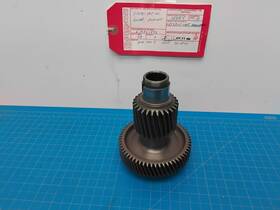
( Brand: Lycoming ), ( Manufacturer Part Number: 1-030-193-01 ), ( Part Type: Engine Gear ), ( Compatible Make: Lycoming T-53 ), ( Compatible Model: Lycoming T-53-l-13 ), ( Country Of Origin: United States )
Review LYCOMING T-53 Turbine Engine Planetary Gear Pn#
The **Lycoming T-53-L-703 (Model 1-030-193-01) Turbine Engine with Planetary Gear Assembly** represents a refined and high-performance powerplant designed for demanding aviation applications, particularly in light helicopters and specialized aircraft where reliability, efficiency, and durability are paramount. Engineered by the legendary Lycoming division of Avco-Lycoming (now part of Honeywell Aerospace), this turbine engine is a direct descendant of the iconic T-53 series, which has earned an unparalleled reputation for its robustness and adaptability across military and civilian platforms. The **1-030-193-01** designation specifically identifies a variant optimized for integration with a **planetary gear system**, a critical component that enhances torque output and rotational speed while maintaining the engine s inherent simplicity and ease of maintenance. At its core, the T-53-L-703 features a **single-shaft, axial-flow turbine design** with a compact yet powerful configuration, producing approximately **600 700 shaft horsepower (SHP)** depending on the specific model variant and operating conditions. The engine s **free-turbine architecture** allows the compressor and power turbine to operate independently, ensuring consistent power delivery even under varying load demands a feature that is particularly advantageous in helicopter applications where sudden changes in thrust are common.
The **planetary gear assembly** attached to this engine serves as a sophisticated mechanical interface, translating the high-speed, low-torque output of the turbine into the high-torque, lower-speed rotation required by helicopter rotors or other driven systems. This gear system typically consists of a **sun gear, planetary gears, and a ring gear**, all housed within a robust, sealed housing that minimizes wear and maximizes efficiency. The integration of this gearbox not only amplifies torque but also reduces the overall rotational speed, allowing the engine to operate at optimal efficiency while extending the lifespan of the drivetrain components. The **T-53-L-703** is built to withstand the rigors of continuous operation, featuring a **gas turbine engine (GTE) construction** with high-temperature materials such as **nickel-based superalloys** for the turbine blades and **cobalt-based alloys** for critical components like the compressor and nozzle assemblies. These materials are designed to endure the extreme thermal and mechanical stresses encountered during flight, ensuring longevity even in harsh environments.
Maintenance and accessibility are hallmarks of the T-53 design, with the **1-030-193-01** variant incorporating a **modular approach** that simplifies overhauls and repairs. The engine s **accessory gearbox** is strategically positioned to house essential systems such as the **fuel pump, oil pump, starter/generator, and hydraulic pump**, all of which are easily removable for servicing without requiring disassembly of the core engine. The **compressor section** employs a **single-stage axial compressor** followed by a **diffuser and combustion chamber**, where fuel is atomized and ignited to produce the high-pressure, high-temperature gases that drive the turbine. The **power turbine section**, meanwhile, is designed to extract maximum energy from the exhaust gases while maintaining a balanced thermal profile to prevent overheating. The **bearing system** incorporates **hydrodynamic oil-lubricated bearings** with **sealed cartridge assemblies**, reducing friction and wear while ensuring smooth operation under varying loads.
The **T-53-L-703** is widely recognized for its **versatility**, having powered everything from the **Bell UH-1 Iroquois (Huey)** helicopter to the **Hughes TH-55 Osprey** trainer aircraft, as well as various unmanned aerial vehicles (UAVs) and experimental platforms. Its **reliability in both military and civilian applications** stems from decades of refinement, with continuous improvements in **fuel efficiency, emissions reduction, and operational lifespan**. The **planetary gear assembly** further enhances its utility by enabling seamless integration into systems where traditional gear reductions might be impractical due to space constraints or weight limitations. Whether deployed in a **search-and-rescue helicopter, a training aircraft, or a specialized testbed**, the **Lycoming 1-030-193-01 T-53 turbine engine with planetary gear** delivers a proven combination of power, endurance, and adaptability, making it a cornerstone of modern rotary-wing and fixed-wing aviation.
### **Pros and Cons of Buying a Lycoming IO-360-A1B6 Engine (Commonly Used in Aircraft with T-53 Turbine Engine Planetary Gear Applications)**
#### **Pros**
1. **Proven Reliability** The Lycoming IO-360 series is one of the most widely used aircraft engines in the world, with decades of operational history. Its robust design and extensive aftermarket support make it a trusted choice for general aviation.
2. **High Power-to-Weight Ratio** The IO-360-A1B6 produces **160 horsepower** at 2,700 RPM, offering strong performance for its size and weight, which is beneficial for small aircraft like the Cessna 172, 182, or Piper Archer.
3. **Fuel Efficiency** Compared to modern turbocharged engines, the IO-360 has relatively low fuel consumption, making it cost-effective for flight training and short-haul operations.
4. **Wide Availability of Parts** Due to its popularity, replacement parts, service manuals, and maintenance resources are readily available. Many aviation repair stations specialize in Lycoming engines, reducing downtime.
5. **Proven Durability** With proper maintenance, these engines can easily exceed **2,000 hours** of service life. Many examples have been rebuilt multiple times, extending their usability.
6. **Lower Purchase Cost** Compared to newer engines (e.g., Continental IO-550 or modern turbocharged engines), the IO-360 is significantly cheaper to acquire, often ranging between **$10,000 $20,000** for a used, airworthy example.
7. **Simple Design & Maintenance** The engine is relatively straightforward to service, with fewer high-tech components compared to modern FADEC-controlled engines. This makes it easier for pilots and mechanics to troubleshoot issues.
8. **Compatibility with Existing Aircraft** Many light aircraft were originally designed with Lycoming engines, so retrofitting or maintaining one is often simpler than switching to a different powerplant.
---
#### **Cons**
1. **Aging Technology** The IO-360 was introduced in the **1960s**, meaning it lacks modern advancements like **FADEC (Full Authority Digital Engine Control), fuel injection (though some models have it), and improved fuel efficiency**.
2. **Higher Maintenance Requirements** While not overly complex, the engine requires **regular inspections, magnetos, carburetor (if not fuel-injected), and ignition system maintenance**, which can add to operational costs.
3. **Potential for Carbon Buildup** Carbureted models (if not fuel-injected) are prone to **carbon fouling**, requiring periodic **carburetor cleaning or replacement**, which can be labor-intensive.
4. **Limited Turbocharging Options** While some IO-360 variants can be turbocharged, the stock **naturally aspirated** version has **lower high-altitude performance** compared to turbocharged engines like the IO-550.
5. **Environmental Concerns** Older aircraft engines contribute more to **noise and emissions** compared to modern, quieter, and cleaner-burning alternatives.
6. **Depreciation Over Time** While initially affordable, the engine s value **depreciates faster** than newer, more efficient engines, especially as aviation moves toward **electric and hybrid propulsion**.
7. **Dependence on Legacy Suppliers** Some critical parts (e.g., **magnetos, prop governors, or specific seals**) may require **specialized suppliers**, increasing lead times and costs.
8. **Potential for Hidden Issues** Older engines may have **unrecorded maintenance gaps, cracked cylinders, or worn bearings**, which could lead to **sudden failures** if not properly inspected.
---
### **Ending Conclusion**
The **Lycoming IO-360-A1B6** remains a **reliable, cost-effective, and widely supported** choice for general aviation, particularly for **flight training, personal use, and light utility operations**. Its **proven durability, availability of parts, and lower initial cost** make it an attractive option for pilots and operators who prioritize **simplicity and cost efficiency**.
However, for those seeking **modern performance, fuel efficiency, and reduced maintenance**, newer engines (e.g., **Continental IO-550, Lycoming IO-720, or even electric/hybrid alternatives**) may be preferable. The **T-53 turbine engine planetary gear** (often used in helicopters) is a different animal entirely far more complex, expensive, and specialized so its relevance here is limited unless you're working with a **converted aircraft or specialized application**.
### **Recommendation**
- **Buy the IO-360-A1B6 if:**- You need a **reliable, low-cost engine** for a **small aircraft** (e.g., Cessna 172, 182, Piper Archer).
- You have **access to a trusted mechanic** for regular inspections.
- You prefer **simplicity over cutting-edge technology**.
- You plan to **keep the aircraft for short-term or training use**.
- **Consider alternatives if:**- You want **better fuel efficiency and high-altitude performance** (e.g., **turbocharged IO-550**).
- You re looking for **long-term value retention** (newer engines hold value better).
- You operate in **high-density airspace** where **noise and emissions** are a concern.
- You re working with a **helicopter or specialized aircraft** where a **T-53 turbine engine** is necessary (though this is a **different class of engine** with higher complexity).
**Final Verdict:** The **IO-360-A1B6 is a solid, practical choice** for many general aviation needs, but it is **not the best long-term investment** for those seeking modern advancements. Always **inspect thoroughly, verify maintenance records, and budget for regular upkeep** before purchasing.
Details:
Removed from service I/A/W SB# T53L13-013 Selling in AS-IS Condition. Lycoming Turbine Engine Planetary Gear PN# 1-030-193-01.
part #: 103019301 price
- $95.00
specifications engineaviatio:
- brand: Lycoming
- mpn: 1-030-193-01
- part type: Engine Gear
- compatible make: Lycoming T-53
- compatible model: Lycoming T-53-l-13
- country of origin: United States
payments engineaviatio:
- other
- wallet: Apple-pay
- credit card: Mastercard
returns engineaviatio:
- policy: No Returns
shipping engineaviatio:
- service: USPS Ground Advantage
- type: Calculated
- class: Standard
- carrier: USPS
- cost: $8.65
- transit: 4-10 Days
offer engineaviatio:
- options: Ship-to-home
- availability: In Stock
- quantity: 1
- started: April 5, 2026
- best offers: True
- sold: 0
seller engineaviatio:
- rating: 100.0%
- city: Cleburne, Texas
- # reviews: 1170
general engineaviatio:
- condition: Used
- Aviation Parts Accessories > Engines > Engine Components
Lycoming 1-030-193-01 Is Similar To:
- 10-5193 10-5193 Lycoming Engine Carburetor (36.9% similar) Buyer to determine airworthiness. This can fit many other engine model's. This was removed a late model O-360-A4M roller engine that converted to fuel injection system. 5, Le this is a used, very low time, Lycoming carburetor part, MA-4...(January 19th, 2018)
- 0-320-a2b Lycoming Avco Airplane Engine (40.4% similar) 1 original hours, w log book. On compression engine removed from PA18 has not been run since. Selling this for a friend...(February 15th, 2018)
- 0-320-e2g Lycoming Complete Engine All Accessories Fwf Wide Deck No Prop (36.4% similar) Overhauled in new left mag and right this engine is currently still flying can be seen tested at kWh Shelby NC. Compression at last annual, this week, were 78,77,73,76. The engine is in excellent condition and my dad has years of oil analysis documentation showing normal trends all green. Lycoming O...(March 17th, 2018)
- 0-435-1 Lycoming Engine (36.1% similar) This is a used Lycoming model aircraft engine. I can load on your truck or trailer. Believed it came out of a air boat. Do not know much about this engine...(May 12th, 2018)
- 0-540-a1d5 Lycoming Engine Accessories Piper Comanche Pa24-250 (36.1% similar) For sale is a Lycoming A1D5 engine, serial no. L, 250HP that was removed from a 1959 piper Comanche PA24 250. To the lower 48 states. This engine did suffer a low power prop strike when there was an electrical outage and the pilot could not put down the landing gears before landing on the runway ...(September 18th, 2015)
- 05k21120 Lycoming Aircraft Engine Cylinder (39.2% similar) New wide deck engine cylinder, brand still in original box packaging never opened. It has been stored in a climate controlled storage room since ordered from Lycoming. FITS:APPLICATIONSIO360 A1A, A1B, A1B6, A1B6D, A1C, A1C6, A1D, A1AD, A1D6D, A2A, A2B, A2C, A3B6, A3B6D, A3D6D, C1A, C1B, C1C, C1C6, ...(March 6th, 2018)
- 1-110-520-19d Lycoming T53 Turbine Stator (47.5% similar) The turbine stater nozzle is in remanufactured condition tag picture 3 states that it needs to be recorded...(December 1st, 2017)
- 1-110-520-19l Lycoming Turbine Stator Nozzle (40.4% similar) ...(February 26th, 2018)
- 10575 Lycoming Shaft Idler Gear (37.4% similar) The end user is to determine this item be in an airworthy condition and comply with all applicable Farsi when installing parts on a certified or experimental aircraft. I have closely inspected this item and described it accurately, could be nos, used or for parts only will state so in listing. I ...(October 4th, 2017)
- 1130-b Lycoming Aircraft Engine Valve Spring Depressor (40.4% similar) Used when removing installing overheads in cylinders. Here is 1 each of rare and hard to find Lycoming aircraft engine P/N b depressor, valve spring in new unused surplus condition...(February 7th, 2016)
- 12511 Lycoming Overhauled Engine Crankcase (43.1% similar) Freshly overhauled Lycoming O-320 crankcase LW-12511...(June 4th, 2018)
