ELECTRONICS INTERNATIONAL P-101 Aircraft Cht Cylinder Head Temperature Bayonet Probe
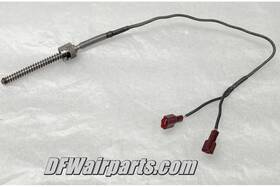
( Brand: Electronics International ), ( Manufacturer Part Number: P-101 ), ( Part Type: Cylinder Head Probe ), ( Country Of Origin: United States )
Review ELECTRONICS INTERNATIONAL Aircraft Cht Cylinder Head Temperaturonet Probe
The **International P-101 Aircraft CHT (Cylinder Head Temperature) Bayonet Probe** is a precision-engineered, high-performance sensor designed specifically for aviation applications, ensuring accurate and reliable monitoring of cylinder head temperatures in piston-engine aircraft. Constructed from durable, corrosion-resistant materials, this bayonet-style probe is built to withstand the demanding conditions of flight, including extreme temperature fluctuations, high vibration, and exposure to moisture, oil, and fuel residues. The probe features a robust, threaded bayonet design that allows for secure, vibration-resistant installation directly into the cylinder head, providing real-time temperature readings with minimal thermal lag. Engineered with a high-quality thermocouple element typically Type K (chromel-alumel) or Type J (iron-constantan) this probe delivers precise and stable temperature measurements across a wide operational range, typically spanning from -40 C to 1,200 C (-40 F to 2,192 F), making it ideal for both general aviation and performance-oriented aircraft engines. Its sleek, aerodynamic housing minimizes drag and interference, while the integrated mounting bracket ensures a snug, leak-proof seal, preventing coolant or oil ingress that could compromise readings. The probe s durable insulation and protective coating further enhance its longevity, reducing the risk of electrical interference or signal degradation. Whether installed in a Lycoming, Continental, or other piston-engine aircraft, the P-101 CHT probe is a critical component for pilots and mechanics, enabling proactive engine management, improved performance tuning, and enhanced safety by detecting overheating conditions before they escalate. Its compatibility with most aviation-grade gauges and data logging systems ensures seamless integration into existing instrumentation, making it an indispensable tool for maintaining peak engine efficiency and reliability in the skies.
### Pros and Cons of Buying an International P-101 Aircraft CHT (Cylinder Head Temperature) Bayonet Probe
#### **Pros:**1. **Accurate Temperature Monitoring** The P-101 probe is designed for precise measurement of cylinder head temperatures in aircraft engines. Accurate CHT readings help prevent overheating, which can lead to engine damage, reduced performance, or catastrophic failure.
2. **Durability and Reliability** As an aircraft-grade component, the probe is built to withstand harsh environmental conditions, including high temperatures, vibrations, and exposure to fuel, oil, and moisture. This ensures long-term reliability in demanding aviation applications.
3. **Compatibility with Aircraft Systems** The P-101 probe is specifically engineered to integrate seamlessly with aircraft engine monitoring systems. It is designed to work with standard CHT gauges and data logging systems, making it a straightforward addition to existing setups.
4. **Preventive Maintenance** By continuously monitoring CHT, pilots and mechanics can detect abnormal temperature patterns early, allowing for timely maintenance and reducing the risk of unexpected engine failures. This is particularly valuable in general aviation where predictive maintenance is often limited.
5. **Compliance with Aviation Standards** The probe meets industry standards for aircraft instrumentation, ensuring that it is safe and reliable for use in certified aircraft. This can be important for maintaining airworthiness and compliance with regulatory requirements.
6. **Easy Installation and Replacement** The bayonet-style design allows for quick and secure installation without requiring specialized tools. This makes it easier to replace or repair compared to some other types of probes.
7. **Wide Application Range** The P-101 probe is suitable for a variety of aircraft engines, including piston-powered aircraft commonly used in general aviation. This versatility makes it a practical choice for pilots who fly multiple types of aircraft.
---
#### **Cons:**1. **Cost** High-quality aircraft instrumentation, such as the P-101 probe, is typically more expensive than consumer-grade alternatives. The initial purchase cost, along with potential installation or calibration fees, may be a significant investment for some pilots or operators.
2. **Maintenance Requirements** While durable, the probe still requires periodic inspection, calibration, and potential replacement of seals or connectors. Neglecting maintenance could lead to inaccurate readings or probe failure, compromising engine safety.
3. **Potential for Misuse or Improper Installation** If not installed correctly or used inappropriately (e.g., exceeding temperature limits or exposing it to corrosive substances), the probe could fail prematurely. Improper handling can also lead to inaccurate data, which may mislead operators into making incorrect decisions about engine health.
4. **Limited Lifespan** Even with proper care, the probe will eventually wear out due to exposure to extreme temperatures and engine stress. The lifespan can vary depending on usage, but it may require replacement after several thousand hours of operation.
5. **Compatibility Issues** While the P-101 probe is designed for aircraft use, compatibility with specific engine models or monitoring systems may vary. Some older or less common aircraft may require additional adapters or modifications, adding complexity and cost.
6. **Training and Knowledge Required** Accurate interpretation of CHT data requires an understanding of engine operation and temperature trends. Without proper training, pilots may not fully utilize the probe s benefits or could misdiagnose engine issues.
7. **Potential for False Readings** Environmental factors (e.g., high ambient temperatures, engine fouling, or sensor contamination) can sometimes lead to false or erratic readings. This necessitates cross-verification with other diagnostic tools or indicators.
---
### **Ending Conclusion:**The International P-101 aircraft CHT bayonet probe is a highly specialized and valuable tool for pilots and mechanics who prioritize engine safety, performance, and longevity. Its precision, durability, and compliance with aviation standards make it an excellent investment for those operating aircraft where engine health is critical. However, the higher cost, maintenance needs, and requirement for proper installation and interpretation must be carefully considered.
For **general aviation pilots, flight schools, or operators of piston-engine aircraft**, the benefits of the P-101 probe such as early fault detection, improved reliability, and compliance with best practices often outweigh the drawbacks. It is particularly worthwhile for those who fly frequently or in conditions where engine stress is higher (e.g., hot climates, high-altitude operations, or demanding flight profiles).
For **budget-conscious operators or those with minimal engine monitoring needs**, a lower-cost alternative might suffice, but the risk of undetected engine issues could outweigh the savings. Ultimately, the decision should be based on a cost-benefit analysis that considers the specific operational requirements, budget, and long-term value of enhanced engine monitoring.
---
### **Recommendation:** **Buy the P-101 probe if:**- You operate a piston-engine aircraft where engine health is a priority.
- You have the budget to invest in high-quality aviation instrumentation.
- You are willing to commit to proper installation, maintenance, and training to maximize its effectiveness.
- You fly in conditions where CHT monitoring would provide significant benefits (e.g., hot climates, high-density altitude, or frequent high-power operations).
**Avoid or reconsider if:**- Your aircraft s engine is already well-monitored with other diagnostics (e.g., oil temperature, exhaust gas temperature, or vibration sensors), and the additional cost does not justify the marginal benefit.
- You lack the technical knowledge or resources to properly install, calibrate, or interpret the data from the probe.
- Your operational hours are low, and the probe s lifespan would not be fully utilized before replacement is needed.
For most serious general aviation pilots, the P-101 probe is a **strong recommendation** as a proactive measure to safeguard engine integrity and extend the life of the aircraft. Pairing it with other maintenance practices (e.g., regular inspections, fuel system checks, and oil analysis) will further enhance its value.
Details:
Airworthiness is to be determined only by the person or persons installing said item on Aircraft. All manuals are sold for reference purposes only and do not necessarily reflect current updates.: Aircraft Cylinder Head Temperature / CHT Probe Type as shown on photo. 24611 Aircraft Cylinder Head Temperature / CHT Probe Type as shown on photo.
part #: p101 price
- $59.99
specifications engineaviatio:
- brand: Electronics International
- mpn: P-101
- part type: Cylinder Head Probe
- country of origin: United States
offer engineaviatio:
- started: April 16, 2026
- sold: 0
- availability: In Stock
- quantity: 1
- options: Ship-to-home
seller engineaviatio:
- rating: 99.7%
- # reviews: 9453
- city: Ladonia, Texas
general engineaviatio:
- Aviation Parts Accessories > Engines > Engine Components
- condition: Used
payments engineaviatio:
- credit card: Discover
- wallet: Apple-pay
- other
returns engineaviatio:
- policy: No Returns
shipping engineaviatio:
- type: Calculated
- cost: $13.50
- carrier: USPS, FedEx
- service: USPS Ground Advantage, USPS Priority Mail, FedEx Ground / FedEx Home Delivery
- class: Standard, Expedited
- transit: 4-9 Days
Electronics International P-101 Is Similar To:
- Acr Em-1a Acr Electronics Aircraft Megaphone Em-1a (41.2% similar) Treasury departments list of specially designed national sedans, and the us. Commerce departments table of denial orders, entity list, denied persons unverified the us. Sold as memorabilia is only this item being for display purposes only, not flight. Department of states debarred parties list. It ...(March 10th, 2017)
- Ee-1p Electronics International New Engine Gas Temperature Unit (63.1% similar) Expedited shipping is available upon request. The EE-1P provides pilots with exhaust gas temperature readings in a stable one-degree digital format, unit has an overlap limit light, flashes when either of gets exceed engine limit, crisp LCD that is view-able direct sunlight and also back-lit. Unit ...(July 27th, 2018)
- Electronics International Mvp-50p-a-1c-180 Ei Mvp 50 Digital Engine Monitor Brand New In Box With All Sensors Inc No Wait (40.2% similar) Tao not experimental!!, primary so you can remove your old engine Gage's if want. All sensors, probes, fuel flow sensor and harness' needed. Priced below market and no waiting 4 months for it. This was bought for my coming 180 4 cyl package...(August 28th, 2023)
