HICKOK 820-707 Oxygen Pressure Indicator Learjet 6608401-20
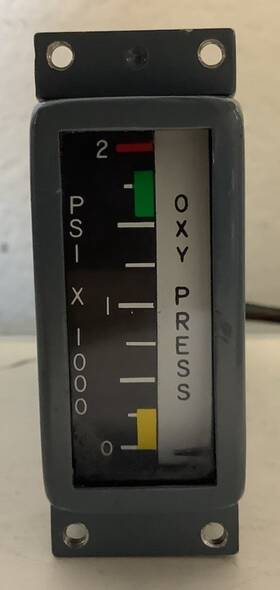
( Brand: Hickok ), ( Manufacturer Part Number: 820-707 ), ( Type: Oxygen Pressure Indicator ), ( Country Of Origin: United States )
Review HICKOK Oxygen Pressure Indicator Learjet
The **Hickok 820-707 Oxygen Pressure Indicator (Learjet Part #6608401-20)** is a precision-engineered aircraft instrument designed to provide critical real-time monitoring of oxygen system pressure within commercial, business, and military aircraft. This rugged yet highly accurate gauge is a direct replacement for the original Learjet oxygen pressure indicator, ensuring seamless integration with the aircraft s existing avionics and oxygen supply systems. Built to withstand the demanding conditions of high-altitude operations, the 820-707 features a durable, anodized aluminum case with a clear, impact-resistant polycarbonate window that maintains visibility even under extreme temperature fluctuations, from -65 F to 185 F. The instrument employs a reliable Bourdon tube mechanism, calibrated for precise readings between 0 and 1,000 psi, allowing pilots and crew to instantly assess oxygen system integrity during pre-flight checks, in-flight monitoring, or emergency scenarios.
The front panel of the 820-707 is equipped with a high-contrast, easy-to-read analog dial marked with clear, legible graduations, ensuring quick and accurate interpretation of pressure levels at a glance. The gauge s robust mounting bracket, designed for OEM compatibility, allows for secure installation in standard aircraft instrument panels, while its low-profile housing minimizes interference with other cockpit controls. Backlit options are available, enhancing visibility in low-light conditions, making it an ideal choice for night operations or aircraft with limited ambient lighting. Additionally, the indicator is fully compliant with FAA and military specifications, including MIL-I-4945 and DO-160 environmental standards, guaranteeing long-term reliability and resistance to vibration, shock, and humidity.
Beyond its functional excellence, the Hickok 820-707 is engineered with safety and redundancy in mind. Its sealed internal components prevent contamination from moisture or debris, while the self-announcing pointer design ensures that pressure fluctuations are immediately noticeable, reducing the risk of undetected system failures. Whether used in a Learjet 60, 70, or other compatible aircraft models, this oxygen pressure indicator serves as a vital link in maintaining crew safety during high-altitude flights, emergency descents, or extended operations where oxygen supply reliability is paramount. With its combination of durability, precision, and ease of use, the Hickok 820-707 remains a trusted standard for aviation professionals who demand nothing less than flawless performance from their critical instrumentation.
### **Pros and Cons of Buying a Used Hickok 820-707 Oxygen Pressure Indicator (Learjet Part #6608401-20)**
#### **Pros:**1. **Functionality and Reliability** The Hickok 820-707 is a well-known, high-quality oxygen pressure indicator used in aviation, particularly on Learjet models. It provides accurate readings of oxygen system pressure, which is critical for crew and passenger safety during high-altitude flights.
2. **Compatibility** This specific unit (part #6608401-20) is designed for the Learjet 60 series, ensuring a direct fit without modification. This reduces the risk of installation issues compared to aftermarket or non-OEM parts.
3. **Durability** Hickok Instruments is a reputable manufacturer with a history of producing rugged, long-lasting avionics components. If properly maintained, this unit could have significant remaining useful life.
4. **Ease of Replacement** Since it is an OEM part, finding installation guides, wiring diagrams, and technical support from Learjet or Hickok may be easier than with generic replacements.
5. **Potential Cost Savings** Purchasing a used unit can be significantly cheaper than buying new, especially if the original is damaged or unavailable. This makes it a cost-effective solution for aircraft owners or maintenance providers.
6. **Avoiding Counterfeit or Non-Standard Parts** Some aftermarket alternatives may not meet FAA certification standards. A used OEM part reduces the risk of non-compliance issues during inspections.
---
#### **Cons:**1. **Age and Wear** Used units may show signs of wear, such as cracked casings, corroded terminals, or degraded internal components. Without a thorough inspection, hidden failures (e.g., faulty gauges, damaged wiring, or failing seals) could go unnoticed.
2. **Testing and Certification Requirements** The FAA requires that oxygen system components be tested and certified before installation. A used unit may need to undergo:
- **Functional testing** (pressure calibration, gauge accuracy).
- **Leak testing** (to ensure no oxygen loss).
- **Electrical continuity checks** (wiring, connectors, and grounding).
- **FAA Form 8130-3** (if applicable for major repairs or replacements).
This adds labor and certification costs.
3. **Potential Hidden Damage** Oxygen systems are critical, and even minor damage (e.g., a cracked gauge housing) could lead to catastrophic failure. A visual inspection alone may not reveal internal issues like:
- **Failed springs or diaphragms** in the pressure sensor.
- **Corroded or oxidized internal components** from prolonged exposure to oxygen or humidity.
- **Worn-out seals** causing leaks.
4. **Limited Warranty or No Warranty** Used parts typically come with no warranty, meaning the buyer bears all risks of failure post-installation. If the unit fails shortly after purchase, repair or replacement costs fall entirely on the owner.
5. **Compatibility with Modern Systems** While this unit is designed for Learjet 60 series aircraft, older models may have different electrical or mechanical interfaces. Ensuring compatibility with the aircraft s existing oxygen system (e.g., pressure regulators, valves) is essential.
6. **Sourcing and Authentication Risks** Purchasing from untrusted sellers (e.g., eBay, Facebook Marketplace, or unvetted aviation parts dealers) increases the risk of:
- **Counterfeit parts** (fake Hickok units).
- **Parts from non-airworthy aircraft** (e.g., accident wrecks or non-FAA-approved sources).
- **Lack of service history**, making it impossible to verify past maintenance.
7. **Installation Complexity** If the aircraft s existing unit was removed due to failure, the installation may require:- **Special tools** (e.g., torque wrenches for gauge mounting).
- **Recalibration** (some oxygen indicators need factory recalibration).
- **Additional modifications** (e.g., rerouting wiring, replacing connectors).
8. **Opportunity Cost** If the unit is non-functional or requires extensive repairs, the time and money spent may exceed the cost of purchasing a new OEM or high-quality aftermarket replacement.
---
### **Conclusion**
Buying a used Hickok 820-707 oxygen pressure indicator can be a **cost-effective solution** for aircraft owners or maintenance providers, especially if the unit is in good condition and properly tested. However, the risks particularly those related to **hidden damage, certification requirements, and reliability** must be carefully evaluated.
**If you proceed with this purchase:**- **Inspect the unit thoroughly** (look for cracks, corrosion, or physical damage).
- **Request a service history** (proof of past maintenance, especially oxygen system checks).
- **Have it professionally tested** before installation (pressure calibration, leak testing, electrical continuity).
- **Ensure FAA compliance** (FAA Form 8130-3 if required, or consult an A&P mechanic).
- **Consider a warranty or return policy** from the seller to mitigate risks.
**If the unit is in questionable condition or you cannot verify its history:**- **Avoid purchasing it** unless you are prepared to invest in full testing and potential replacement.
- **Explore new OEM options** (if available) or high-quality aftermarket alternatives with warranties.
---
### **Recommendation**
1. **Best Case (Low Risk):**- Purchase from a **reputable aviation parts dealer** (e.g., Aircraft Spruce, Aviation Supplies & Academics, or a trusted broker).
- **Demand a full inspection report** (including pressure testing, leak checks, and electrical continuity).
- **Budget for professional testing and certification** ( $200 $500 depending on complexity).
- **Install only if the unit passes all tests** and meets FAA standards.
2. **Alternative (Higher Assurance):**- **Buy a new OEM replacement** (if available) or a **high-quality aftermarket unit with a warranty** (e.g., from a manufacturer like **BendixKing, Goodrich, or Honeywell**).
- **New units come with warranties**, reducing long-term risk.
3. **Avoid (High Risk):**- Purchasing from **unverified sellers** (e.g., private individuals without inspection records).
- Installing a **used unit without testing**, as this could lead to **FAA violations or in-flight failures**.
**Final Verdict:**The Hickok 820-707 is a **viable used option if sourced responsibly and thoroughly tested**. However, the **costs of testing and potential failures may outweigh the savings** compared to a new or warranted replacement. **Prioritize safety and compliance** a poorly maintained oxygen system is not worth the risk.
Details:
Free shipping only applies to the 48 contiguous states. Hickok 820-707 Oxygen Pressure Indicator Learjet 6608401-20, Please see photos for details.
part #: 820707 prices
- $129.99-$420.00
specifications engineaviatio:
- brand: Hickok
- mpn: 820-707
- type: Oxygen Pressure Indicator
- country of origin: United States
payments engineaviatio:
- credit card: Discover
- wallet: Paypal
- other
general engineaviatio:
- Aviation Parts Accessories > Engines > Engine Components
- condition: Used
shipping engineaviatio:
- service: Standard
- type: Fixed
- class: Standard
- transit: 4-9 Days
- cost: $0.00
returns engineaviatio:
- policy: Returns Accepted
- paid by: Buyer
- time: 30 Days
offer engineaviatio:
- sold: 0
- started: April 30, 2026
- availability: In Stock
- quantity: 1
- options: Ship-to-home
seller engineaviatio:
- rating: 99.8%
- city: Anaheim, California
- # reviews: 27135
Hickok 820-707 Is Similar To:
- Hickok Electrical 562-287 Dc Volt Load Indicator Beechcraft (44.1% similar) Hickok electrical 562-287 dc volt load indicator beech craft...(October 16th, 2024)
- Hickok 6608401-13 820-665 Hydraulic Pressure Indicator Learjet (66.1% similar) Hickok 820-665 hydraulic pressure indicator learjet 6608401-13, please see photos for details. Free shipping only applies to the 48 contiguous states...(April 17th, 2026)
